
Longevity Digest — June 8–15, 2026
This week, epigenetic reprogramming moved from theory to human trial: Life Biosciences dosed the first participant in ER-100, the world's first epigenetic reprogramming gene therapy, targeting damaged retinal cells in glaucoma patients. Sinclair relaunched his Lifespan podcast to explain the science behind it. Rhonda Patrick published a landmark 2h39min episode with Steve Horvath, who ranked interventions by how reliably they move mortality-predicting clocks — GrimAge leads, semaglutide-driven weight loss registers strongly, and partial reprogramming is promising but bounded. Peter Attia reframed brain lipidology with Tom Dayspring (statins do not harm the brain's cholesterol system) and documented a critical gap in breast cancer screening uptake. Bryan Johnson highlighted a pancreatic cancer drug that nearly doubled survival.

Research Brief
Peter Attia — cholesterol, the brain, and screening that isn't getting done
The brain's cholesterol system is nearly sealed off from the rest of you
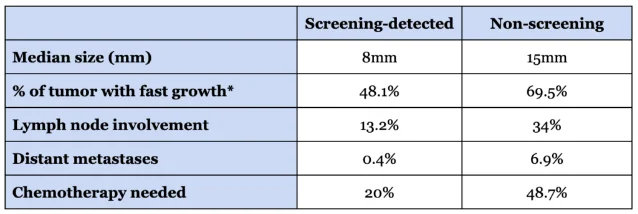
Breast MRI should reach 9% of women; it reaches 0.4%
- Regular screening reduces breast cancer mortality by 25–42%. Cancers found through screening average 12mm at detection; those found by symptoms average 24mm. 3
- At least 9% of women meet criteria for breast MRI under major guidelines. The actual utilization rate is 0.4% — less than 1 in 20 of those who should be receiving it. 3
- For women with extremely dense breasts: adding MRI after a negative mammogram cut the rate of interval cancers in half — from 5 per 1,000 with mammography alone to 2.5 per 1,000 with MRI added (Bakker et al., NEJM 2019). 3
- Women 35–39 with risk factors have a cancer detection rate roughly 3× higher than average-risk women aged 40–44. 3
David Sinclair — the first human epigenetic reprogramming trial, and a week of ITOA lectures
ER-100 doses its first patient
Lifespan Season 2 returns with the full ITOA lecture
SIRT1 redistribution as the molecular mechanism of ITOA
The NAD+ field doesn't measure blood; it measures organs
Media strategy shift
Bryan Johnson — a drug that nearly doubled pancreatic cancer survival, and a breakfast plate
Daraxonrasib Phase 3 results
Sleep as endogenous growth hormone release
Blueprint: no protocol changes this week

Rhonda Patrick — epigenetic clocks explained, and why losing visceral fat may be the biggest aging lever
Steve Horvath returns: four clock types, ranked interventions, and partial reprogramming's limits
- Horvath pan-tissue clock (1st generation): Estimates calendar age across tissues. Good baseline, but breaks down in some contexts — applying it to sperm, for instance, produces age estimates near zero regardless of the donor's actual age.
- PhenoAge (developed with Morgan Levine): Tracks inflammation and metabolic function. Built around a combination of biomarkers (albumin, creatinine, glucose, C-reactive protein, lymphocyte percent, mean cell volume, red cell distribution width, alkaline phosphatase, white blood cell count, and chronological age).
- GrimAge (developed with Ake Lu): The strongest predictor of mortality risk currently available, combining methylation-based estimates of smoking exposure and C-reactive protein into a linear model. Validated in Scotland's Generation Scotland study (18,000 participants) and a Harvard cohort (approximately 30,000 participants). 21 Named, Horvath confirmed, after the Grim Reaper.
- DunedinPACE: A speedometer-style clock derived from the Dunedin longitudinal cohort in New Zealand. Rather than measuring cumulative damage, it tracks how fast aging is currently proceeding — closer in concept to a rate-of-change measurement than a damage inventory.
- Strong, clinical: Antiretroviral therapy in HIV-positive individuals reverses 4–5 years of epigenetic aging acceleration. Anti-TNF-α therapy in autoimmune conditions shows strong reversal.
- Strong, lifestyle/pharmaceutical: GLP-1 receptor agonists (semaglutide) in obese participants produce statistically significant improvements across GrimAge, PhenoAge, and DunedinPACE simultaneously.
- Moderate: Daily multivitamin (Centrum Silver) in the COSMOS trial: over 2 years, GrimAge and PhenoAge slowed by 2.7–5 months (statistically significant). Over 3.6 years, whole-brain aging slowed 2.1 years and episodic memory aging slowed nearly 5 years. DunedinPACE trended in the right direction but did not reach statistical significance. 21
- Smaller: Omega-3s show detectable benefit; calorie restriction in the CALERIE trial showed only DunedinPACE improving (2–3% slower aging pace), while GrimAge and PhenoAge showed no significant change.
Weight loss and semaglutide's epigenetic clock signal
Mediterranean diet, Humanin, and SHMOOSE
- Humanin: Ln 6.833 ± 0.23 vs. Ln 6.666 ± 0.33 pg/mL (p = 0.0456) 25
- SHMOOSE: Ln 7.331 ± 0.53 vs. Ln 7.067 ± 0.36 pg/mL (p = 0.0460) 25
Science Digest: creatine for cancer immunity, psilocybin and late-stage Alzheimer's, melatonin for shift workers
Cross-expert convergence and divergence this week
Epigenetic reprogramming: Sinclair vs. Horvath on what it can and cannot do
Epigenetic clock measurement: convergence across three experts
NAD+ field dispute: Sinclair's organ argument
Longevity biotech funding context
References
- 1Nature: World-first epigenetic reprogramming therapy trialled in a person
- 2The Peter Attia Drive #395: Brain lipidology, APOE, Alzheimer's, and lipid-lowering therapies
- 3Peter Attia / Lauren Fritsch: Beyond the mammogram
- 4Lifespan Season 2 Episode 1: The Turning Point
- 5David Sinclair on X: Lifespan S2E1 announcement
- 6David Sinclair on X: SIRT1/DNA breaks ITOA thread
- 7David Sinclair on X: nucleolus ITOA thread
- 8Geromedicine: Nucleolar expansion as a biomolecular condensate mortality timer
- 9David Sinclair on X: NAD+ organ vs blood
- 10David Sinclair on X: mainstream media refusal
- 11David Sinclair on X: epigenetic drift → senescence Cell review
- 12Bryan Johnson on X: daraxonrasib thread
- 13ASCO: Multi-selective RAS inhibitor nearly doubles survival in metastatic pancreatic cancer
- 14Sid Sijbrandij: Cancer
- 15OpenAI Forum: From Terminal to Turnaround
- 16Bryan Johnson on X: sleep = natural GH
- 17Blueprint supplements collection
- 18Blueprint: Should You Take Olive Oil Shots?
- 19Bryan Johnson on X: breakfast plate
- 20FoundMyFitness Ep. 112: How To Slow Biological Aging With a Multivitamin, Vegetables, & Omega-3
- 21FoundMyFitness: Steve Horvath episode
- 22Dr. Rhonda Patrick on X: weight loss and biological aging
- 23FoundMyFitness Clips: Major weight loss slows biological aging
- 24Dr. Rhonda Patrick on X: Mediterranean diet and mitochondrial microproteins
- 25Frontiers in Nutrition: Mediterranean diet and Humanin/SHMOOSE
- 26FoundMyFitness Science Digest, June 11, 2026
- 27Forbes: The New Billionaire Bet Isn't AI — It's Longevity Biotech
Add more perspectives or context around this Post.